

When do the people who fight for the night get to rest?
Laure Togola & Célia Texier · March 20, 2024
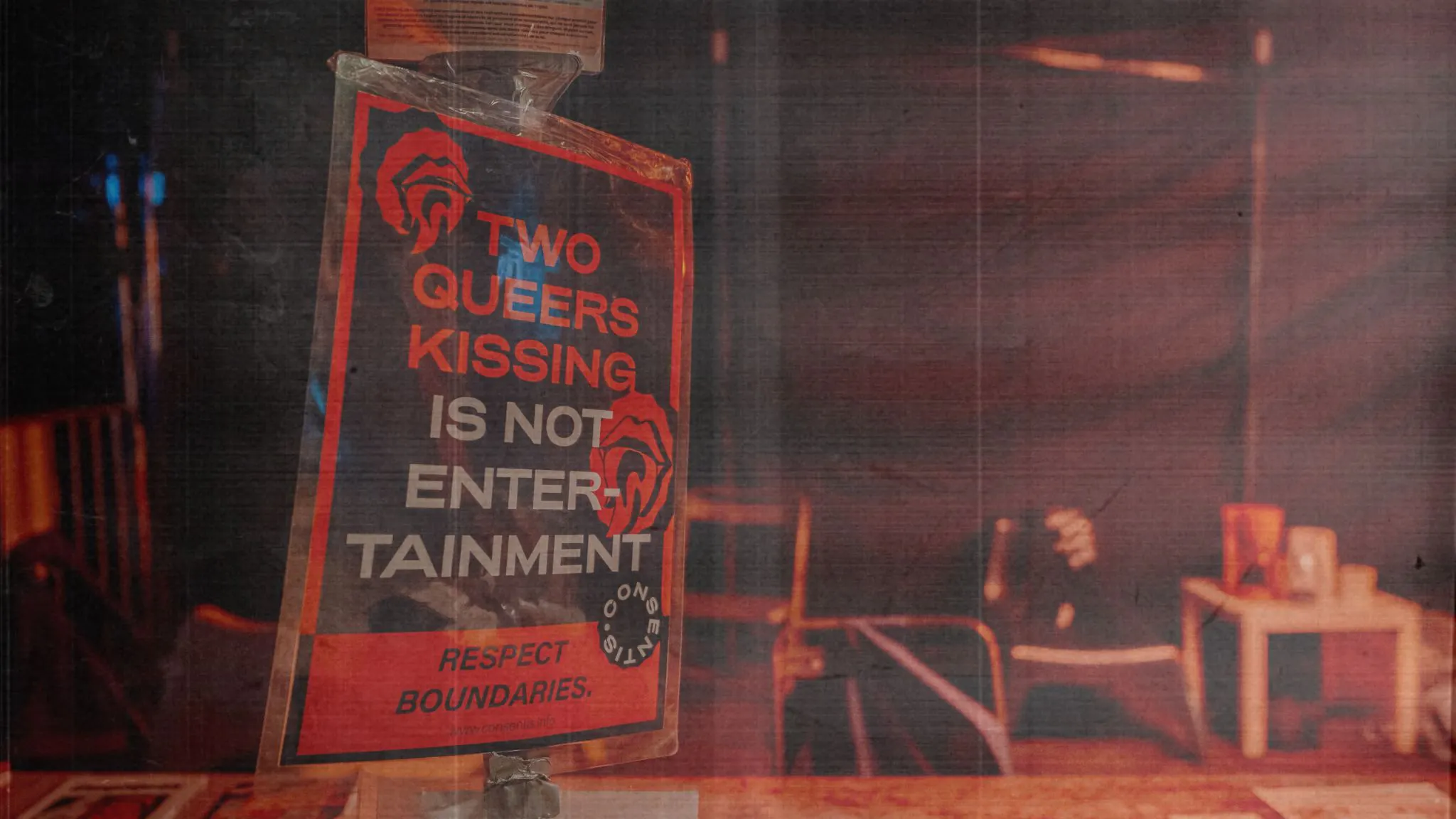
archivesA year before the French government named mental health a “grande cause nationale”, we decided to explore the theme in the third issue of Flashes: words and images to reinvent the night. In early 2024, we met Domitille Raveau, who DJs under the name Domi and co-founded the association Consentis, which has profoundly transformed prevention and awareness around sexist, sexual and discriminatory violence in nightlife. In this interview, conducted in 2024, we talk about activist burnout, political commitment and therapy: what the fight costs those who carry it, and what it can also heal.
While significant changes have been observed in the nightlife scene since the 2020–2021 pandemic, these changes have, with a few exceptions, been driven entirely by activist organizations and individuals committed to these transformations, many of whom have personally experienced or been victims of gender-based and sexual violence during the course of their work. In just a few years, Consentis, an organization fighting against gender-based and sexual violence in party and festival settings, has become indispensable to the various stakeholders in the nightlife scene. Training on these topics is gradually becoming mandatory in order to receive public funding in various sectors (for example, the CNM, Centre National de la Musique in France, has made the grant receival for performance venues contingent on staff training), but this raises questions: who is responsible for consent education? Who protects the public when they go out at night? How do the people involved in these organizations cope with such a heavy mental burden?
When Domitille Raveau, DJ and co-founder of Consentis, told us about her burnout[1], we realized that her experience is an opportunity to teach us how to keep fighting without compromising our mental health. Her journey is an inspiration and helps us understand the burden – and sometimes the dangers – of care work in the party scene. Through her interview, we aim to highlight the need to also take care of those who take care of us.
Hello Domitille! Can you tell us a little about yourself, your background, and how you came to co-found Consentis in 2018?
My name is Domitille, co-founder of Consentis, an organization that will celebrate its sixth anniversary in 2024. At the time of founding Consentis, I had just graduated with a degree in social psychology. I wanted to join an organization dedicated to preventing sexual violence, but I couldn’t find the right fit. I realized that I knew the party scene well and that it was the environment where violence had had the greatest impact on me. I also realized that there was a whole nightlife culture that I deeply identified with.
I co-founded the organization with Mathilde, my best friend. At the time, we weren’t aware of any initiatives in France focused on preventing sexual violence in the party scene. So we drew inspiration from similar efforts we saw abroad and added our own personal touch, drawing from our own on-the-ground experience.
Our first step was to conduct a study to assess the extent of sexual violence at parties. We knew this was already an issue, but we didn’t realize just how widespread it was. We conducted a survey among more than 1,000 people, realized that the results were devastating, and that we needed to take action. Following this survey, we began setting up booths at parties, drawing inspiration from setups run by harm reduction organizations. At first, it was mainly to share the results of our survey and raise awareness about the issue. As we received more and more requests for assistance, we developed our training and support programs for event organizers – which is how Consentis became a training organization.
How was your initiative received within the industry, and what were your working conditions like at the time?
Consentis quickly gained significant visibility, which obviously had an impact on the party scene. The scene was already in high demand when we arrived, but nothing existed yet – everything had to be invented from scratch, and that was just six years ago. When I look back on that time, I remember our enthusiasm and courage, but it came at the expense of our mental health, because our working conditions were truly appalling. Since we built everything from scratch, it was very difficult to establish decent working conditions. The workload was extremely grueling: we worked nights, we were constantly asked to do more… with little respect for everything we did.
Despite everything, we were able to quickly develop the right approach to get the organization back on track, which allowed us to grow – especially since Mathilde had experience as a project manager. It still took three years before the organization received funding. At first, everything was free and we did it all on a volunteer basis. Although that is no longer the case today, it still remains like volunteer work with certain constraints.
What’s even more intense, is that we’re talking about sexual violence – it’s a complex issue that comes with high expectations from the people who reach out to us. Most of the time, when an organization contacts us for training, it’s because something has already happened within their ranks.
Expectations are very high and numerous, and it’s easy to get overwhelmed. And in the end, there’s very little reward because, even though activist victories are worth celebrating, they’re quite small. Especially in our field of prevention, what would a victory even look like? We know full well that we can’t prevent violence from happening; if it’s going to happen, it will happen. On the other hand, if the person received proper support, if they managed to speak out… Those are the indicators of success, but that victory will always feel like a defeat because someone has still experienced violence.
Our goal is to reduce the number of incidents of sexual violence, but it is currently difficult to quantify them, largely because we lack the appropriate tools. Studies conducted in recent years do indeed show a noticeable increase in sexual violence, but this is largely due to the fact that people did not report such incidents in the past.
« Today, I’m proud of the training programs we offer because they’re super high quality. We built them based on our own experiences, the research that we did, and other reliable sources that we gathered. It was a massive undertaking. »
For a long time, we ran one booth a month, which was a huge commitment given the resources we had, since I was the one running them all with a team of volunteers – people we could always count on.
In addition to being an activist in the party scene, you’re also a DJ under the name Domi. How does wearing these two hats affect you?
I started DJing in 2021, at a point when I’d already been working for Consentis for three years. What struck me right away as an artist was that I was always treated better than I was as the co-founder of Consentis. The economy of a nightlife event relies on the artists. It’s the artists who sell tickets and drive bar sales, whereas the prevention booth isn’t essential for most organizers, and even though it’s hard work. People don’t bother to even properly welcome the staff manning it.
Of course, there are times when we’re well received because we’re gaining more and more respect, and that’s happening more frequently, but that wasn’t the case at the beginning. We had to fight just to get a table and a chair! We quickly realized that Consentis was being used as a marketing ploy by some organizers, meaning that the presence of our booth implied they didn’t need to make an effort anymore. That’s why we’ve changed our approach several times, and today we only set up booths at events where we’ve trained the team beforehand.
How do you balance partying with your care work responsibilities? How does activism affect your relationship with the party scene?
My answer is going to be very personal and doesn't reflect the experiences of the other people in the association at all. I think I handle it pretty well, because I was quickly able to separate my work from my social life. I have felt some conflict and guilt because of that, but when I'm out at a party, I just check out. I might drink some alcohol, and if something happens right in front of me, I’ll obviously be an active witness. However, I know that I shouldn’t take responsibility for an event I witness as a co-founder of Consentis or as a prevention expert – only as a partygoer. It’s the organizers’ responsibility to respond, not mine.
However, what’s hard for me right now as an artist is that I’m facing sexual harassment on a fairly regular basis. It’s a kind of harassment I’m less used to. As a partygoer, I’ve developed avoidance strategies for so long that I hardly even think about it anymore, whereas as an artist, I feel much more vulnerable, and it’s degrading. Something that happened to me last week comes to mind: I was performing, and a guy asked for my number… I told him no, but he asked me at least five more times.
On the other hand, going through these experiences as an artist makes me want to develop prevention initiatives. I tell myself that this isn’t just a personal experience, but one that’s widely shared by other artists. These experiences will give me the tools that I’ll need, and I think it’s obviously a huge motivator.
In 2021, you experienced what’s known as “activist burnout.” Can you tell us what led to it?
There were many reasons for this burnout: an excessive workload, the numerous and high expectations of organizers, the demanding nature of the work for little reward, and an activist culture that glorifies sacrifice and self-sacrifice – which pushes us to forget ourselves and our own limits… This isn’t a job like any other because it is a job where we are confronted every day with violence, and with accounts of violence that can traumatize us, even if we were not the original targets of that violence (see vicarious trauma[2]). It’s also a profession in which you’re subjected to frequent insults (mainly online), in which there’s risks of attacks from the far right, and risks of attack from masculinists[3]… Overall, it’s a job where you are required to take a lot of risks.
On top of that, during the pandemic, the demand for our services skyrocketed. With festive events on hold, it was a time when all the organizers wanted to get training and the workload was enormous. I was the association’s only employee at the time. We didn’t want to hire anyone else because we didn’t know if or when event venues would reopen. Mathilde (who worked for the organization two days a week) and I shouldered this burden alone. I know I share some of the responsibility for the intense workload. At what point did I fail to say stop, at what point did I fail to protect myself? Part of my personal responsibility was also the urge to see my project succeed, and I didn’t draw the line at that time: my self-esteem was entirely tied to Consentis’s success, which was obviously very problematic and led me to push myself beyond my limits.
I was already struggling at work, and the media coverage of #BalanceTonBar in late 2021 just swept everything away… I went all in after that. Suddenly, that movement brought a huge visibility to the issue of sexual violence in nightlife, and as an association, we’re at the mercy of the media’s agenda. When there’s a big moment like that for the cause, you have to jump on it. It was a nonstop schedule of several interviews a day, with the journalists themselves equally under pressure. I’d get text messages on the weekends; I’d do interviews on Saturday nights at 9 p.m. for shows that weren’t even aired afterward… I started to lose sight of the meaning of it all. I realized I was giving so much for so little in return, so little progress… So I had to step back from the organization’s activities to find some rest.
How did your return to Consentis go? What measures have you put in place to protect yourself?
I returned to the association in January 2023, working part-time as part of my recovery. After my year-long battle with depression, I honestly didn’t think I’d be able to go back. It wasn’t until I regained my energy and took care of myself that I realized just how much this project meant to me. Today, I’m no longer acting in a mindset of sacrifice. I’ve matured, I’ve gotten older, and even though this experience deeply traumatized me, I’ve learned some valuable lessons from it. There’s something that makes me laugh and feel ashamed at the same time: Consentis is an organization that promotes consent, but in my case, I clearly failed to listen to my own limits… It’s a valuable personal lesson.
Nowadays, we’re making more and more of an effort to take care of ourselves. We’ve really grown as a team: we have several employees now, which wasn’t at all the case two years ago. It’s also very important for us to set boundaries, establish guidelines, and put concrete tools in place so that everyone working at Consentis feels good.
« When you’re an activist who’s constantly making sacrifices, there inevitably comes a point where you hit a wall… But we absolutely must not let the cause or our actions come to a halt. It’s therefore essential to take care of our activists so we can continue to make political progress. »
Since I returned to the organization, we’ve made significant improvements in terms of our internal structure. We’ve hired new full-time staff, with whom we hold weekly check-ins to stay on top of everyone’s projects. We’ve also set up a time-tracking system, and we have a dedicated mental health support team that we can consult if we feel the need to.
My depression also brought my class privilege into sharp focus, due to my access to therapy. One of the reasons why I’m doing so well today is that I had the opportunity to take a year off from work. While I took a break, I also had the chance to see a therapist, which is expensive. I’m well aware that I have many friends around me who don’t have the same access to those resources. It’s essential to make therapy accessible to everyone – it’s actually a necessity, an urgent priority.
Who is responsible for care work today? Would you say that there has been a shift in awareness since you've started, and that the mental load is now more evenly distributed?
Six years ago, Consentis was one of the first associations to take on the role of care work, but we need to ask ourselves why. Why Consentis? Why did these efforts rely only on our volunteers? Why have we lacked resources for so long? What are our public services actually doing? How is it that when we carry out initiatives in higher education, it’s the first time students have heard about consent during their schooling? Our work is a band-aid on a gaping wound…
Today, the public expects event organizers to implement prevention measures. The public knows us and considers it normal for us to talk about consent in festival and party settings. Fortunately, the mental load is now shared among several organizations and initiatives that collectively support the event industry (for example, Les Catherinettes, La Petite, Serein·e·s…). Right after the pandemic and the #BalanceTonBar movement, we gained access to the funding dedicated to our areas of focus. But we know full well that the grants are going to be cut – we’ve been warned about this for several years now. It is imperative for our initiatives to be continuously funded given their importance and scope. At the national level however, they just rolled out an anti-GHB communication campaign… but that’s not at all what we asked for. It’s disheartening… We try to stay positive, and we’re still happy to be doing what we do. Thankfully, we have a zest for life and plenty of energy!
Editor’s note: We interviewed Domitille two years ago, in 2024. Since then, her career has taken new directions. She helped create the initiative Reinvent the Night, driven by the desire to collectively design useful tools, with and for other artists. She has also stepped away from her activities at Consentis, and now devotes a larger share of her time to her musical project.
